A jury of your peers. It is a bedrock promise of the American justice system. The Sixth Amendment guarantees it. The Fourteenth Amendment protects it. But what happens when race becomes a factor in jury selection?
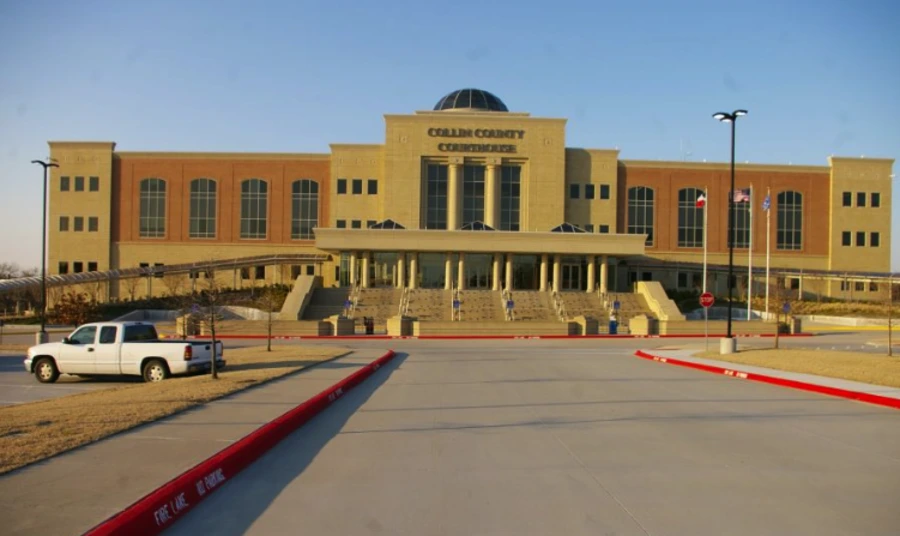
The Karmelo Anthony murder trial in Collin County has brought this issue to the forefront. Anthony, a young Black man, faces a first-degree murder charge for the stabbing death of Austin Metcalf, a white student, during a Frisco high school track meet in April. The case has drawn national attention. And now, the jury selection process has sparked outrage.
When the final jury was seated, none of the 12 jurors or six alternates were Black. Defense attorneys objected. Activists protested. The judge ruled against the defense and in favor of prosecutors. The controversy raised a critical legal question: When can a lawyer remove a potential juror based on race? And when does that removal become illegal?
What Is the Batson Challenge?
The Batson Challenge comes from a landmark U.S. Supreme Court case: Batson v. Kentucky, decided in 1986. The Court ruled that prosecutors cannot use peremptory strikes to remove potential jurors solely because of their race. This violates the Equal Protection Clause of the Fourteenth Amendment.
Texas codified this rule in Article 35.261 of the Texas Code of Criminal Procedure. Later Supreme Court decisions expanded Batson. Now, neither the prosecution nor the defense may strike a juror based on race, gender, or ethnic origin.
The Three-Step Batson Process
When a lawyer believes race has illegally influenced jury selection, they raise a Batson challenge. Texas courts follow a three-step process:
Step 1: Make a Prima Facie Case
The objecting party must show facts that suggest the opposing party struck jurors because of race. In the Anthony case, defense attorneys pointed out that prosecutors struck three Black jurors. Those three were the only Black candidates left in the jury pool. That raised a red flag.
Step 2: Provide a Race-Neutral Explanation
Once the objecting party makes their case, the burden shifts. The party who used the strikes must provide a race-neutral reason for each strike. The reason does not need to be persuasive. It does not need to make sense. It simply cannot be based on race.
In the Anthony case, prosecutors said they struck the three Black jurors because all three were educators. They argued that educators might be biased in a case involving a high school student killing another student on school campus during a school event.
Step 3: Court Decides
The trial court judge then decides whether the objecting party has proved purposeful racial discrimination. The burden of persuasion stays with the objecting party throughout. They must convince the judge that race was the real reason.
Judge John Roach ruled against the defense. He accepted the prosecutors’ explanation that the strikes were based on occupation, not race.
What Makes a Valid Race-Neutral Reason?
Texas courts have approved many race-neutral reasons over the years. Occupation is one of them. A prosecutor can strike a juror because they are a teacher, a postal worker, or a doctor. Other approved reasons include:
- The juror has no children
- The juror seemed hostile or uncooperative
- The juror had a family member convicted of a similar crime
- The juror slept through voir dire
- The juror struggled to understand questions
The key point is this. The reason does not need to be fair. It does not need to be logical. It simply cannot be based on race. As long as the prosecutor offers any race-neutral explanation, and the defense cannot prove pretext, the strike will stand.
Why Are Batson Challenges So Hard to Win?
Here is the reality. Batson challenges rarely succeed. The defense bears the burden of proof. They must prove that race was the real reason. That is hard to do when the prosecution can offer any race-neutral explanation.
In the Anthony case, the prosecution said they struck the jurors because they were educators. The defense could not prove that was a lie. The judge accepted the explanation. The strikes stood.
This is why the Batson challenge is sometimes called a “toothless tiger.” The law prohibits race-based strikes. But the system makes it very difficult to prove they happened.
The Broader Context: A Pattern of Concern
The Anthony case is not happening in a vacuum. Activists have raised alarms about jury selection practices across Texas. The Next Generation Action Network issued a statement expressing “outrage” over what happened in Collin County.
“This action raises serious concerns about the fairness and integrity of the judicial process,” the statement read. “When qualified jurors are excluded in a manner that appears to systematically eliminate representation from a community directly impacted by the outcome of a case, it creates legitimate concerns about whether justice can truly be administered fairly and impartially”.
The Anthony trial has already drawn international attention. TMZ has covered it. The New York Post has covered it. Race has elevated this case to national headlines. And the jury selection controversy ensures that attention will continue.
Batson Challenges: FAQs
What is a peremptory strike?
A peremptory strike allows a lawyer to remove a potential juror without giving a reason. Each side gets a limited number of these strikes. They are valuable tools for shaping the jury. But they cannot be used for racial discrimination.
Does Batson apply to defense attorneys too?
Yes. The rule applies to both prosecutors and defense attorneys. Neither side may strike a juror based on race, gender, or ethnic origin.
What happens if a Batson violation is found on appeal?
The conviction may be overturned. A new trial could be ordered with a properly selected jury. This is why preserving the issue during trial is so important.
Collin County Criminal Defense Attorney
At Starr Law, P.C., we understand the importance of a fair jury. Your right to an impartial jury is enshrined in the Constitution. We fight to protect that right at every stage of your case.
If you are facing criminal charges, call us. We will review your case. We will protect your rights. We will fight for the best possible outcome.
Contact Starr Law, P.C. today for a free and confidential consultation. Call us at 214-982-1408.
References
- Batson v. Kentucky, 476 U.S. 79 (1986)
- Texas Code of Criminal Procedure, Article 35.261
- NBC 5 Dallas-Fort Worth: Karmelo Anthony trial coverage
- KVUE: Activists raise concern over racial makeup of jury
- Dallas Observer: No black jurors chosen in Karmelo Anthony trial