You thought you were doing everything right. You made your court appearances. You followed the conditions of your bond. You stayed out of trouble. Then you got arrested again. Now you are sitting in jail, and the magistrate judge says they cannot set a bond. You are confused. You are frustrated. You are stuck.
This situation happens more often than people realize. If you are arrested for a new felony while on bond for another felony, a magistrate judge cannot set your bond. Under Texas law, only a specific judge can handle your release.
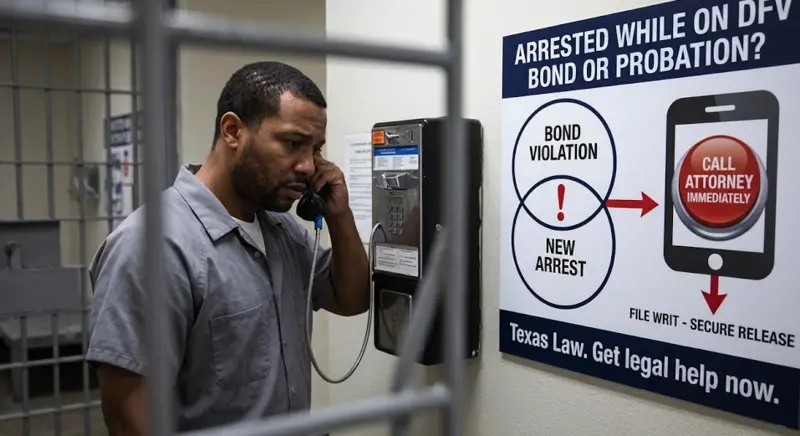
Understanding this process is critical. Without the right legal help, you could sit in jail for days or weeks waiting for a hearing that will never come. You need an attorney who knows how to file a Writ of Habeas Corpus under CCP 17.027 to get you released.
What Is CCP 17.027?
Texas Code of Criminal Procedure Article 17.027 is a specific law that governs bail for certain defendants. It applies when:
- You are charged with a felony offense
- You were already released on bail for another pending felony
- The new offense was committed in the same county as the previous offense
Under this statute, the magistrate judge cannot set your bond. Only the judge presiding over your original pending case has that authority. Or a judge that the original judge designates in writing.
The Statute:
Art. 17.027. RELEASE ON BAIL OF DEFENDANT CHARGED WITH FELONY OFFENSE COMMITTED WHILE ON BAIL
(a) Notwithstanding any other law:
(1) if a defendant is charged with committing an offense punishable as a felony while released on bail in a pending case for another offense punishable as a felony and the subsequent offense was committed in the same county as the previous offense, the defendant may be released on bail only by:
(A) the court before whom the case for the previous offense is pending; or
(B) another court designated in writing by the court described by Paragraph (A); and
(2) if a defendant is charged with committing an offense punishable as a felony while released on bail for another pending offense punishable as a felony and the subsequent offense was committed in a different county than the previous offense, electronic notice of the charge must be promptly given to the court specified by Subdivision (1) for purposes of reevaluating the bail decision, determining whether any bail conditions were violated, or taking any other applicable action.(b) This article may not be construed to extend any deadline provided by Article 15.17.
Why Magistrate Judges Cannot Set Your Bond
Most people assume that when you are arrested, you will see a magistrate judge within 48 hours. That judge will inform you of your charges and set a bond. This is true for most arrests. But not when CCP 17.027 applies.
When this statute applies, the magistrate judge lacks jurisdiction. They cannot set a bond. They cannot release you. All they can do is inform you of the charge and wait.
The only judge who can set your bond is the judge handling your original pending case. But here is the problem. That judge may not be available for days or weeks. There is no automatic process to bring your case before them. You could sit in jail indefinitely waiting for something that will not happen on its own.
This Also Applies to Probation Violations
The same issue arises when you are arrested while on probation. If you are on felony probation, and you get arrested for a new felony, a magistrate judge often will not set bond. They will tell you that you need to appear before the judge who placed you on probation.
Even if the new arrest happened before you were placed on probation, you can still face this problem. Magistrate judges may not set a bond until you appear before the district judge on your case.
The Solution: Filing a Writ of Habeas Corpus
When you are stuck in this situation, you cannot wait. You need to take action immediately. The solution is to file a Writ of Habeas Corpus.
A Writ of Habeas Corpus is a legal filing that asks a judge to review whether your detention is lawful. In this context, you are asking the district judge to set a bond in your new case. The writ forces the judge to address your situation promptly.
Filing a writ requires knowledge of the law and access to the courts. You cannot do this from a jail cell. You need an attorney who knows the process and can file the paperwork on your behalf.
What Happens When We File the Writ?
When Starr Law, P.C. files a Writ of Habeas Corpus on your behalf:
- We prepare the legal documents. The writ must include specific information about your pending case, your new arrest, and why your detention is unlawful.
- We present the writ to the district judge. We file the documents with the court that handles your original pending case. This is the only judge who can set your bond.
- We request an immediate hearing. We ask the judge to set a hearing as soon as possible. In many cases, we can get you before a judge within 24 to 48 hours.
- We argue for your release. At the hearing, we present arguments for a reasonable bond. We highlight your ties to the community, your lack of flight risk, and any other factors that support your release.
Why You Need an Attorney for This Process
This is not a do-it-yourself situation. The Writ of Habeas Corpus process is complex. The rules are strict. Mistakes in the filing can delay your release or cause the writ to be denied.
An experienced attorney knows:
- Which judge has jurisdiction over your case
- How to properly draft the writ
- What evidence to include to support your release
- How to argue effectively for a reasonable bond
At Starr Law, P.C., we have extensive experience filing Writs of Habeas Corpus in Collin County and across Texas. We know the judges. We know the process. We know how to get results.
Arrested While on Bond or Probation: FAQs
How long will I be in jail if I don’t file a writ?
It depends on the judge and the court’s schedule. Without a writ, you could wait days or weeks. The magistrate judge cannot help you. The district judge will not know about your situation unless someone files something. A writ forces the issue and gets you before a judge quickly.
What if my new arrest is in a different county?
If the new arrest happened in a different county, CCP 17.027 requires you to send an electronic notice. Send the notice to the judge in your original case. That judge will reevaluate your bail decision. But this process can still take time. A writ may still be necessary to ensure a prompt hearing.
Does this apply to misdemeanors?
CCP 17.027 specifically addresses felonies. However, magistrate judges may still hesitate to set bond in misdemeanor cases if you are on probation. They may also hesitate if you are on bond in another case. A writ can help in those situations as well.
What if I was arrested before I was placed on probation?
This happens frequently. You may have a pending case that has not yet been resolved. Then you get a new arrest. The magistrate judge may refuse to set a bond because your original case is still pending. A writ is still the solution.
Plano Criminal Defense Attorney: We Get You Out
At Starr Law, P.C., we understand how frustrating it is to sit in jail when no one seems able to help you. The magistrate judge says they cannot act. The district judge does not know you are there. You feel forgotten.
We do not let our clients wait. When you are arrested while on bond or probation, we act immediately. We file the Writ of Habeas Corpus. We get you before the judge who can actually set your bond. We fight for your release.
We have extensive experience handling these complex situations in Collin County and across Texas. We know the law. We know the judges. We know how to get results.
If you or a loved one is sitting in jail after an arrest while on bond or probation, do not wait. Contact Starr Law, P.C. immediately. We can file the writ and get you before a judge. Call us 24/7 at 214-982-1408.