Getting hurt on the job is a frightening experience. One moment, you’re doing your regular work. The next, you face pain, rising medical bills, and doubt about when, or if, you’ll return to work.
In Texas, the path to compensation after a workplace injury is different than in any other state. Understanding those differences is critical to protecting your future.
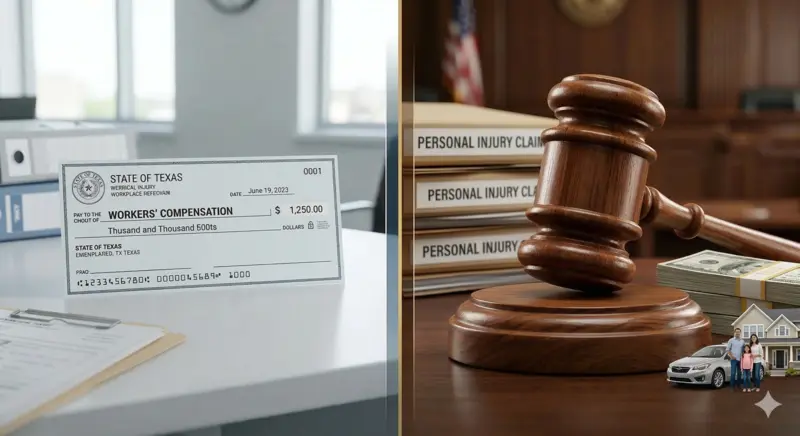
Unlike the rest of the country, Texas does not require most private employers to carry workers’ compensation insurance . This unique legal landscape creates two very different paths for injured workers. Your options depend entirely on whether your employer participates in the workers’ comp system. If they don’t, you may have powerful legal rights that go far beyond what workers’ comp provides.
Whether you are a construction worker injured in a fall. You may be an oilfield worker hurt in an equipment accident. Or you may be another employee hurt at work.
Knowing your rights is the first step. It can help you get the compensation you deserve.

The Texas Difference: Workers’ Comp Is Optional
Texas stands alone. It is the only state where private employers can legally choose whether to carry workers’ compensation insurance . This creates two categories of employers:
- Subscribers: Employers who carry workers’ comp insurance. If you work for a subscriber, your rights and remedies are generally limited to the workers’ comp system.
- Non-Subscribers: Employers who opt out of the workers’ comp system. Nearly 44% of Texas employers fall into this category . If you work for a non-subscriber, you may be able to sue your employer directly for negligence.
This distinction matters tremendously. It decides what benefits you can receive. It also affects how much compensation you can recover. It determines whether you can seek damages for pain and suffering.
If Your Employer Has Workers’ Compensation Insurance
When your employer subscribes to the Texas workers’ compensation system, you are covered by a no-fault insurance program. This means you can receive benefits regardless of who caused the accident—even if it was your own mistake .
What Workers’ Comp Covers
The Texas workers’ comp system provides several types of benefits :
- Medical Benefits: Coverage for necessary medical treatment related to your workplace injury, including doctor visits, surgery, hospital stays, and prescriptions
- Income Benefits: Partial wage replacement if your injury keeps you from working
- Impairment Benefits: Compensation for permanent damage or loss of function
- Supplemental Income Benefits: Additional payments if you have ongoing financial needs after your impairment benefits end
- Death Benefits: Paid to eligible family members if a worker dies on the job
The Trade-Off: What Workers’ Comp Doesn’t Cover
The workers’ comp system is a compromise. In exchange for guaranteed benefits without proving fault, injured workers give up something significant. They give up the right to sue their employer. Workers’ compensation does not provide compensation for:
- Pain and suffering
- Emotional distress
- Loss of enjoyment of life
- Full wage replacement (you receive only a portion of your lost wages)
For many injured workers, especially those with serious, life-altering injuries, these limitations can be devastating.
Critical Deadlines in the Workers’ Comp System
The workers’ comp system has strict deadlines that can extinguish your rights if missed :
- 30 Days: You must report your injury to your employer within 30 days. Report it from the accident date. Or report it from the date you learned of an occupational illness
- 1 Year: You have one year from the date of injury to file a formal claim with the Texas Division of Workers’ Compensation
Missing either deadline can permanently bar you from receiving benefits.
If Your Employer Is a Non-Subscriber
If your employer does not carry workers’ compensation insurance, the rules change dramatically. You are not limited to the workers’ comp system. Instead, you have the right to sue your employer directly for negligence .
Advantages of Suing a Non-Subscriber Employer
When you sue a non-subscriber employer, you may seek the full range of damages allowed in a personal injury case:
- All Medical Expenses: Past, present, and future medical costs related to your injury
- Full Lost Wages: Complete wage loss during recovery, plus loss of future earning capacity
- Pain and Suffering: Compensation for the physical pain and emotional toll of your injury
- Physical Impairment: Damages for permanent disability or disfigurement
- Mental Anguish: Compensation for anxiety, depression, and trauma
Perhaps most significantly, Texas law strips non-subscriber employers of certain defenses. They cannot argue that you were partly at fault (contributory negligence) or that you “assumed the risk” by doing your job . This makes it significantly easier to win your case and recover full compensation.
Proving Negligence
To succeed in a non-subscriber lawsuit, you must prove that your employer’s negligence caused your injury. This typically involves showing that the employer :
- Failed to provide adequate safety training
- Ignored OSHA regulations or industry safety standards
- Allowed unsafe equipment or machinery to remain in use
- Created or tolerated hazardous working conditions
- Failed to warn employees of known dangers
Third-Party Claims: An Option for Everyone
Even if your employer has workers’ comp, you may still sue another party. That party’s negligence may have helped cause your injury. These are called “third-party claims,” and they can provide compensation beyond what workers’ comp offers.
Common third-party scenarios include:
- Defective Equipment: If a machine, tool, or safety device failed and injured you, the manufacturer may be liable. You may be able to file a product liability lawsuit
- Subcontractors or Vendors: If another company working on your job site caused your injury, you can sue them directly
- Property Owners: If you were injured on property not owned by your employer, the property owner may be responsible
- Negligent Drivers: If you were hurt in a car accident while driving for work, the at-fault driver can be sued
Third-party claims can help you recover pain and suffering damages. They can also help you get full compensation. You may still be able to recover these damages even if you receive workers’ comp benefits.
Common Workplace Injuries in Texas
Workplace injuries can happen in any industry, but certain injuries are particularly common in Texas’s major employment sectors :
- Construction: Falls from scaffolding, crane accidents, electrocutions, and structural collapses
- Oil and Gas: Explosions, chemical exposure, equipment failures, and transportation accidents
- Warehousing and Logistics: Forklift crashes, falling inventory, and repetitive strain injuries
- Manufacturing: Conveyor belt injuries, burns, machine malfunctions, and inadequate PPE
What to Do If You’re Injured at Work
Your actions in the hours and days after a workplace injury can make or break your claim. Follow these steps to protect your rights :
- Report the Injury Immediately: Notify your supervisor or employer as soon as possible. In the workers’ comp system, you have only 30 days. For non-subscriber claims, prompt reporting preserves evidence.
- Seek Medical Attention: Get treatment right away, even if the injury seems minor. Documentation from medical professionals is critical evidence.
- Document Everything: Take photos of the accident scene, your injuries, and any hazardous conditions. Write down witness names and contact information.
- Keep Records: Save all medical bills, correspondence with your employer, and documentation of missed work and related expenses.
- Contact an Attorney Before Speaking with Insurance: Insurance adjusters are trained to minimize your claim. Do not give a recorded statement or accept any settlement without legal advice.
- Do Not Sign Anything: Do not sign any documents from your employer or their insurance company. Have an attorney review them first.
Work-Related Injuries: FAQs
How long do I have to file a claim?
It depends on your situation :
- Workers’ comp: Report within 30 days, file within one year
- Non-subscriber lawsuit: Two years from the date of injury
- Third-party claims: Two years (varies by case type)
- Jones Act (maritime): Three years
Can I be fired for reporting a workplace injury?
Texas law prohibits employers from retaliating against employees who file workers’ compensation claims in good faith. If you are fired for reporting an injury, you may have additional legal claims against your employer .
What if I was partly at fault for the accident?
If your employer is a non-subscriber, Texas law prohibits them from using your own negligence as a defense. You can still recover full compensation even if you were partially at fault .
If you’re in the workers’ comp system, fault doesn’t matter—you receive benefits regardless.
Do I need a lawyer for a workplace injury claim?
For minor injuries with straightforward workers’ comp claims, you may not need an attorney. But if your injury is serious, your employer does not subscribe, or your claim is denied, you should hire a lawyer. An attorney can:
- Determine which laws apply to your case
- Ensure all deadlines are met
- Gather evidence to support your claim
- Negotiate with insurance companies
- File a lawsuit if necessary
Plano Work Injury Attorney: We Fight for You
At Starr Law, P.C., we know a workplace injury can affect your whole life. It can impact your health, your family’s finances, and your future. Whether you have workers’ comp or your employer is a non-subscriber, we can help. We have the experience to guide you through the process and fight for the compensation you deserve.
We don’t just process claims. We investigate, we gather evidence, and we hold employers accountable when their negligence causes harm. With deep experience handling injury cases in Collin County and across Texas, we know how to stand up for you. We take on insurance companies and employers who try to reduce your recovery.
You focus on healing. We’ll handle the rest.
If you’ve been injured at work, don’t wait. Contact Starr Law, P.C. today for a free, confidential consultation. Let’s talk about what happened and how we can help. Call us at 214-982-1408.
References
- Texas Labor Code, Chapters 401-419 (Workers’ Compensation Act)
- Texas Division of Workers’ Compensation, Injured Employee Resources