If you’ve been arrested for driving while intoxicated in Texas, you’re facing a legal system that has become significantly tougher in recent months. Lawmakers have responded to rising crash statistics by enacting some of the most aggressive DWI penalties in years, and the stakes for anyone charged have never been higher .
According to the Texas Department of Transportation, more than 1,000 fatalities in 2024 were linked to alcohol-related crashes. That number drove legislative changes that took effect recently, creating new felony classifications, enhanced penalties for high-blood alcohol concentration (BAC) cases, and longer potential prison sentences .
Whether this is your first arrest or you’ve been through this before, you need to understand exactly what you’re facing and how an experienced defense attorney can protect your freedom, your license, and your future.
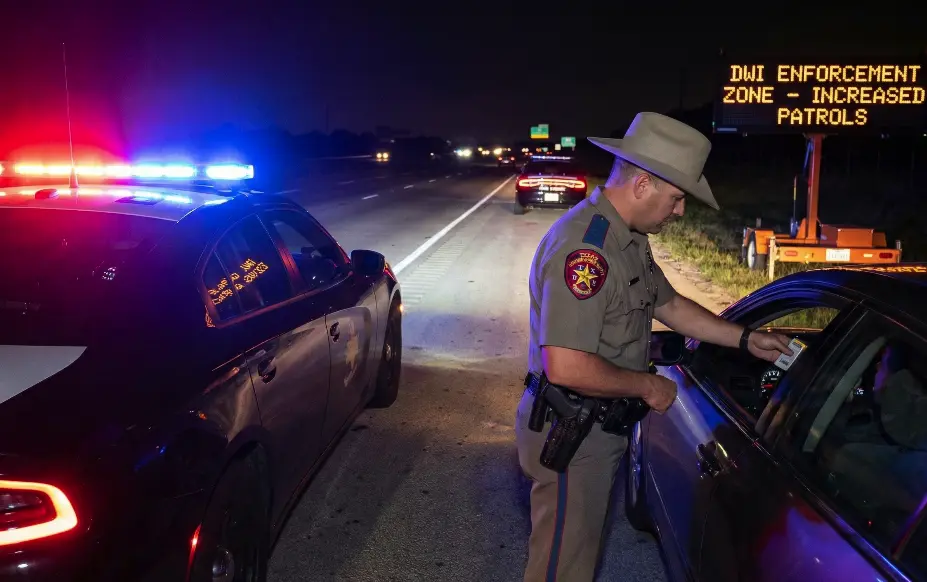
The Two Fronts of a DWI Battle
Before diving into specific penalties, you must understand that a DWI arrest triggers two separate legal proceedings happening simultaneously :
- The Criminal Case: This is the court case where the state tries to prove you guilty. A conviction results in fines, jail time, and a permanent criminal record.
- The Administrative Case: This is a separate civil fight with the Texas Department of Public Safety (DPS) over your driver’s license. From the moment of arrest, you have only 15 days to request an Administrative License Revocation (ALR) hearing. Miss that deadline, and your license is automatically suspended, regardless of what happens in your criminal case .
Penalties by Offense Level: What’s at Stake
Texas law imposes escalating penalties based on the number of prior convictions. Here is the current landscape under the 2026 updates.
First-Offense DWI
A standard first-time DWI is typically charged as a Class B misdemeanor under Texas Penal Code §49.04 . The potential consequences include:
- Jail Time: 3 to 180 days in county jail (with a mandatory minimum of 72 hours)
- Fine: Up to $2,000
- License Suspension: 90 days to 1 year
- Annual Surcharge: $1,000 for three years to keep your license
However, if your BAC was 0.15 or higher, the charge is elevated to a Class A misdemeanor, carrying up to one year in jail and a fine up to $4,000 .
Second-Offense DWI
A second DWI is a Class A misdemeanor under Texas Penal Code §49.09(a) . Penalties jump significantly:
- Jail Time: 30 days to 1 year in county jail (mandatory minimum)
- Fine: Up to $4,000
- License Suspension: 180 days to 2 years
- Annual Surcharge: $1,500 for three years
- Ignition Interlock Device: Almost always required as a condition of bond and probation
Third-Offense DWI
A third DWI is a third-degree felony, regardless of how long ago the prior convictions occurred . This is life-altering:
- Prison Time: 2 to 10 years in the Texas Department of Criminal Justice (state prison)
- Fine: Up to $10,000
- License Suspension: 180 days to 2 years
- Annual Surcharge: $2,000 for three years
- Loss of Rights: As a convicted felon, you lose the right to vote and to own firearms
Major 2026 Law Changes You Need to Know
Recent legislative updates have created new ways for even a first-time DWI to become a felony .
New Felony Classifications
Under the new laws, a DWI is now a state jail felony if :
- The arrest occurs in a school crossing zone, or
- There is a child under the age of 15 in the vehicle
A state jail felony carries 180 days to 2 years in a state jail facility and a fine up to $10,000 . This is a felony conviction with all the attendant consequences—loss of firearm rights, voting restrictions, and permanent employment barriers.
Enhanced Penalties for High BAC
Drivers with a BAC of 0.15 or higher now face enhanced consequences. These cases are automatically charged as Class A misdemeanors (rather than Class B), and judges are increasingly imposing stricter conditions including mandatory ignition interlock devices, even for first-time offenders .
Intoxication Manslaughter Becomes First-Degree Felony
Perhaps the most dramatic change involves intoxication manslaughter—when a drunk driver causes someone’s death. Previously a second-degree felony, this offense is now a first-degree felony if more than one death occurs .
The punishment range for a first-degree felony is 5 to 99 years, or life, in prison and a fine up to $10,000 . This reflects the legislature’s determination to treat drunk driving deaths with the same severity as the most serious violent crimes.
The Ignition Interlock Device: What to Expect
Ignition interlock devices (IIDs) have become standard in Texas DWI cases. An IID requires you to blow into a device before your vehicle will start, and it demands random rolling retests while driving .
You can expect an IID requirement if :
- Your BAC was 0.15 or higher
- You have any prior DWI history
- The court orders it as a condition of bond
- You seek an Occupational Driver’s License during suspension
You are responsible for all costs: installation (typically $70-$150) and monthly monitoring fees (around $60-$90) .
Field Sobriety Tests: Not as Reliable as You Think
Standardized Field Sobriety Tests (SFSTs) are a cornerstone of many DWI prosecutions, but they are far from infallible. These tests—Horizontal Gaze Nystagmus, Walk-and-Turn, and One-Leg Stand—are highly subjective and depend on proper administration .
- The test was conducted on uneven ground or in poor lighting
- The defendant had a medical condition affecting balance
- The officer didn’t give clear instructions
- The officer lacked proper training
An experienced attorney knows how to scrutinize the video footage and challenge whether the tests were properly administered. In many cases, this scrutiny can lead to suppressed evidence or even dismissal .
Breath and Blood Tests: Challenging the Science
BAC results often form the backbone of a DWI case, but they aren’t always accurate. Skilled defense attorneys know that challenging these test results is one of the most powerful strategies available .
Potential challenges include :
- Improper calibration or maintenance of breathalyzer machines
- Operator errors during testing
- Medical conditions (like GERD) that cause false positives
- Chain of custody issues for blood samples
- Delays in testing that allow alcohol levels to rise post-arrest
In some cases, defense attorneys bring in expert witnesses—toxicologists or lab specialists—to explain flaws in the science behind the prosecution’s results .
DWI vs. DUI: Understanding the Difference
Texas law distinguishes between DWI and DUI, and knowing the difference matters .
- DWI (Driving While Intoxicated): Applies to persons aged 21 or older. Requires proof of intoxication (loss of normal faculties or BAC of 0.08 or higher) .
- DUI (Driving Under the Influence): Applies only to minors under 21. Under Texas’s “zero tolerance” policy, a minor can be charged with DUI for having any detectable amount of alcohol in their system, regardless of impairment. It’s a Class C misdemeanor punishable by a fine up to $500 .
Commercial drivers face stricter standards: a BAC of 0.04 percent can result in a DWI charge, reflecting the higher safety standards for professional operators .
What to Do Immediately After a DWI Arrest
Your actions in the first hours and days after an arrest are critical.
- Do Not Speak to Investigators Without Your Attorney. Anything you say will be used against you. Politely but firmly state, “I will not speak without my attorney present” .
- Request an ALR Hearing Immediately. You have only 15 days from the date of arrest to request this hearing. Missing the deadline results in automatic license suspension .
- Document Everything. Write down everything you remember about the stop, the tests, and your interactions with officers while it’s fresh in your mind.
- Contact a Defense Attorney Immediately. Early intervention can make the difference between a dismissal and a conviction. We can advise you on bond conditions, begin investigating the stop, and protect your rights from day one.
DWI in Texas: FAQs
Can I get probation for a first-time DWI?
Yes. For many first-time offenders without aggravating factors, probation is a realistic outcome. Probation typically includes reporting to an officer, alcohol education classes, community service, and possible interlock requirements .
Will I lose my license?
Probably, but an Occupational Driver’s License (ODL) may allow you to drive for essential purposes like work and school during the suspension period. Your attorney can help you petition for an ODL .
What if I refused the breath test?
Refusal triggers an automatic 180-day license suspension (compared to 90 days if you fail). However, refusal also means the prosecution lacks a BAC number, which can be a strategic advantage in your criminal case .
Can a DWI be dismissed?
Yes. Dismissals are possible when the traffic stop was unlawful, probable cause was lacking, field sobriety tests were improperly administered, or constitutional rights were violated .
Plano DWI Defense Attorney
A DWI charge is not just a legal problem; it’s a threat to everything you’ve built. Your job, your family, your reputation—all of it hangs in the balance. And with the 2026 law changes, the stakes are higher than ever.
At Starr Law, P.C., we don’t process cases; we defend people. With vast experience handling DWI cases in Collin County, we know how to challenge the traffic stop, scrutinize the field sobriety tests, question the reliability of chemical testing, and fight for the best possible outcome. We are not plea-bargain lawyers who will rush you into a deal. We are trial-tested attorneys prepared to take your case to court if that’s what it takes to protect your future.
The 15-day ALR clock is already ticking. The time to act is now.
Contact Starr Law, P.C. immediately for a confidential consultation. Call us 24/7 at 214-982-1408.
References
- Texas Penal Code, Chapter 49 (Intoxication Offenses)
- Texas Transportation Code, Chapter 724 (Implied Consent)
- Texas Department of Public Safety, Administrative License Revocation Program
- Texas lawmakers toughen DWI penalties to curb number of deadly crashes
- New Texas DWI laws create more ways for charges to become felonies