The moments after a car accident are chaotic, painful, and confusing. One minute you’re driving home on the Dallas North Tollway or stopped at a light on Preston Road. The next, your car is damaged, you are hurt, and your future feels uncertain.
In that chaos, even well-meaning people make mistakes. Insurance companies may use those mistakes to cut your settlement. They may even deny your claim. Having handled countless accident cases here in Collin County, I’ve seen how a single misstep can cost victims thousands of dollars and years of frustration.
If you’ve been in a crash, you’re likely researching what to do next. That’s exactly the right instinct. Below are the seven most common mistakes I see Plano accident victims make—and how to avoid them.
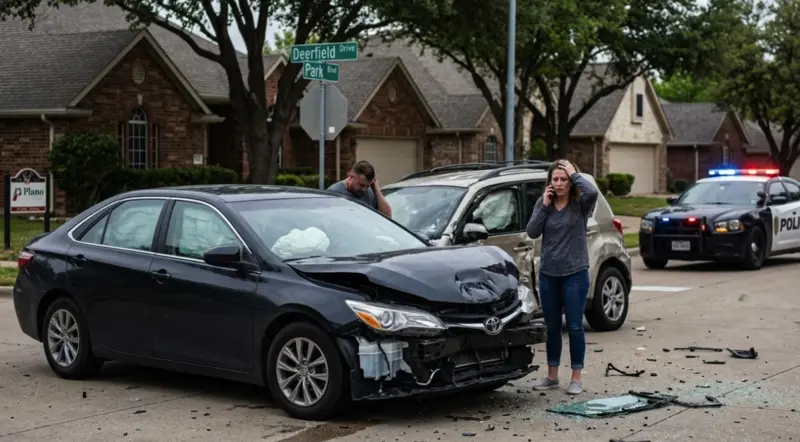
Mistake #1: Failing to Call the Police
This is perhaps the most common and damaging mistake. Many drivers involved in minor fender-benders assume they don’t need to involve law enforcement. They exchange information with the other driver and go on their way, thinking they’ve handled things properly.
Here’s the problem: without an official police report, you have no independent documentation of what happened. Weeks later, when the other driver’s story changes—and it often does—it’s your word against theirs. Insurance companies love this because it gives them an excuse to deny liability.
What to do instead: Always call 911 after a collision, even if the accident seems minor. Request that a police officer respond to the scene. The responding officer will create an official report documenting the date, time, location, parties involved, witness information, and often a preliminary assessment of fault. This report is invaluable evidence that insurance companies take seriously.
Mistake #2: Not Collecting Proper Information at the Scene
Even with a police report on the way, you need to gather your own evidence. Many victims assume the police will handle everything, but supplemental documentation can make or break your case months later.
What to do instead: Using your phone, take:
- A photo of the other driver’s driver’s license
- A photo of their insurance card (check the expiration date carefully)
- Photos of the other driver (yes, take their picture)
- Multiple photos of both vehicles, including license plates, damage from multiple angles, and the overall scene
- Photos of any skid marks, debris, or road conditions
Also, identify and get contact information from any witnesses before they leave the scene. Witness statements can be crucial if liability is disputed.
Mistake #3: Saying “I’m Sorry” or “I’m Fine”
It’s human nature to be polite. After a wreck, many people instinctively apologize—even when the accident wasn’t their fault. Others, when asked how they’re feeling, say “I’m fine” because they’re shaken up and don’t want to make a scene.
Here’s the hard truth: anything you say at the scene can and will be used against you. An apology can be interpreted as an admission of fault. Telling someone you’re “fine” gives insurance adjusters ammunition to argue that your later complaints of pain are exaggerated or unrelated to the accident.
What to do instead: Exchange necessary information with the other driver, but keep conversation to a minimum. Do not discuss fault, do not apologize, and do not make statements about your physical condition. Wait for the police to arrive and let the official report document the facts.
Mistake #4: Declining Medical Attention at the Scene or Delaying Treatment
This mistake can devastate both your health and your claim. Many accident victims refuse ambulance transport because they’re afraid of the bill. Others feel “okay” in the adrenaline rush after a crash and decide to skip the emergency room.
The problem is that serious injuries—concussions, internal bleeding, spinal injuries—may not show symptoms immediately. Adrenaline is a powerful painkiller. By the time you realize you’re hurt, hours or days have passed, and the insurance company will argue that your injuries weren’t caused by the accident.
What to do instead: Accept medical care at the scene if it’s offered. If you’re not transported by ambulance, go to an emergency room, urgent care, or your doctor the same day or as soon as possible. This creates immediate medical documentation linking your injuries to the crash. Insurance adjusters and juries rely heavily on medical records—not just your word—to prove damages.
Mistake #5: Speaking to Insurance Adjusters Before Hiring an Attorney
Within days of an accident, you’ll likely receive a call from an insurance adjuster. They may sound friendly and concerned. They may say they just want to “get your side of the story” so they can process your claim quickly.
This is a trap. Insurance adjusters are not on your side. Their job is to protect their company’s bottom line by minimizing or denying your claim. They are trained to ask questions designed to get you to say things that undermine your case—even seemingly innocent questions about how you’re feeling or what you remember.
What to do instead: Do not give a recorded statement. Do not sign anything. Do not accept any settlement offer. Instead, politely tell the adjuster that you’ll be in touch after you’ve spoken with an attorney. Then contact a personal injury lawyer immediately.
Mistake #6: Accepting the First Settlement Offer
When the insurance company does make an offer, it will almost certainly be too low. Adjusters start with lowball offers hoping you’ll accept out of desperation or ignorance. They know you have mounting medical bills and may be eager to resolve things quickly.
But once you accept a settlement, your case is closed forever. You cannot go back and ask for more money if your injuries turn out to be worse than you thought or if your medical bills exceed the settlement amount.
What to do instead: Have an attorney review any offer before you accept it. An experienced lawyer can calculate the full value of your claim—including future medical costs, lost earning capacity, and pain and suffering—and negotiate for a fair settlement. If negotiations fail, a good lawyer will be prepared to file a lawsuit and take your case to trial.
Mistake #7: Not Hiring an Attorney Soon Enough
Some accident victims try to handle things on their own, hiring a lawyer only when they hit a roadblock. By then, critical evidence may have been lost, witnesses may have disappeared, and important deadlines may be looming.
In Texas, the statute of limitations for personal injury claims is two years from the date of the accident. That sounds like plenty of time, but building a strong case takes time—gathering evidence, interviewing witnesses, consulting experts, and negotiating with insurers. Waiting too long can jeopardize your ability to recover anything at all.
What to do instead: Contact an attorney as soon as possible after the accident—ideally within days, not weeks or months. Early involvement allows your lawyer to preserve evidence, advise you on what to say (and not say) to insurers, and build the strongest possible case from the start.
Why These Mistakes Matter: Texas Law and Insurance Companies
Texas operates under a “modified comparative fault” rule. This means that if you are found to be 51% or more at fault for the accident, you recover nothing. If you are less than 51% at fault, your compensation is reduced by your percentage of faul.
Insurance companies will seize on any mistake you make to argue that you were partially at fault—or that your injuries aren’t as serious as you claim. They will use your own words, your delay in seeking treatment, and your lack of documentation against you.
The stakes are high. According to the Texas Department of Transportation, there were over 15,000 serious injury crashes in Texas in 2023, with more than 18,000 people sustaining serious injuries and over 4,000 deaths. These aren’t abstract numbers—they’re real people whose lives were changed in an instant.
Plano Car Accident FAQs
How long do I have to file a lawsuit in Texas?
The statute of limitations for personal injury claims is two years from the date of the accident. If you miss this deadline, you lose your right to seek compensation forever.
What if I was partly at fault?
Under Texas’s modified comparative fault rule, you can still recover compensation if you were less than 51% at fault. However, your recovery will be reduced by your percentage of fault.
What damages can I recover?
You may be entitled to economic damages (medical bills, lost wages, property damage) and non-economic damages (pain and suffering, emotional distress, loss of enjoyment of life).
Do I really need a lawyer for a minor accident?
For very minor accidents with no injuries and minimal property damage, you may be able to handle things yourself. But if you have any injuries, significant vehicle damage, or questions about fault, you should at least consult with an attorney. Most personal injury lawyers, including Starr Law, P.C., offer free initial consultations.
Plano Personal Injury Attorney: We Know How to Protect Your Rights
I’ve been handling personal injury cases in Collin County for over 28 years. I’ve seen what insurance companies do when they think they can take advantage of an accident victim. I’ve also seen the difference it makes when a client has strong representation from day one.
At Starr Law, P.C., we don’t just process claims—we fight for our clients. We investigate accidents thoroughly, document every aspect of your damages, negotiate aggressively with insurance companies, and, when necessary, take cases to trial. We know the local courts, the local adjusters, and the tactics they use to minimize payouts.
If you’ve been injured in a car accident in Plano, Frisco, McKinney, or anywhere in Collin County, don’t make these critical mistakes on your own. Let us guide you through the process and fight for the compensation you deserve.
Your first consultation is free. Your future is too important to leave to chance. Contact Starr Law, P.C. today at 214-982-1408.
References
- Texas Department of Transportation, Crash Statistics 2023
- Texas Civil Practice & Remedies Code, Chapter 33 (Proportionate Responsibility)
- Texas Civil Practice & Remedies Code, Chapter 16 (Statute of Limitations)